
What caught my eye at Design Show Australia 2026
Design Show Australia 2026 took place in Sydney from Thursday 11 to Saturday 13 June 2026 at the International Convention Centre Sydney (ICC Sydney). Three days. Over 250 brands. One unexpected soundtrack. I walked every aisle with the same filter I bring to every project: does this solve a real problem for real people? Not what looks good in a render — what actually works in a home. Here is what passed the test.
The kitchen just got smarter. Three brands stood out for what they are doing to the most-used room in the house.
HÄFELE. Their new sensor-activated bin opens the moment you place your foot near the cabinet — no hands required. For anyone who has ever stood at a kitchen bench with wet hands or a full plate trying to lift a lid, you will understand immediately why this matters. They also showed a sliding benchtop that conceals the sink and stove underneath. Clean lines on the surface, and a genuine safety feature if you have children in the house — which I do. Both solutions are the kind of quiet intelligence that separates a well-designed kitchen from a beautiful one.
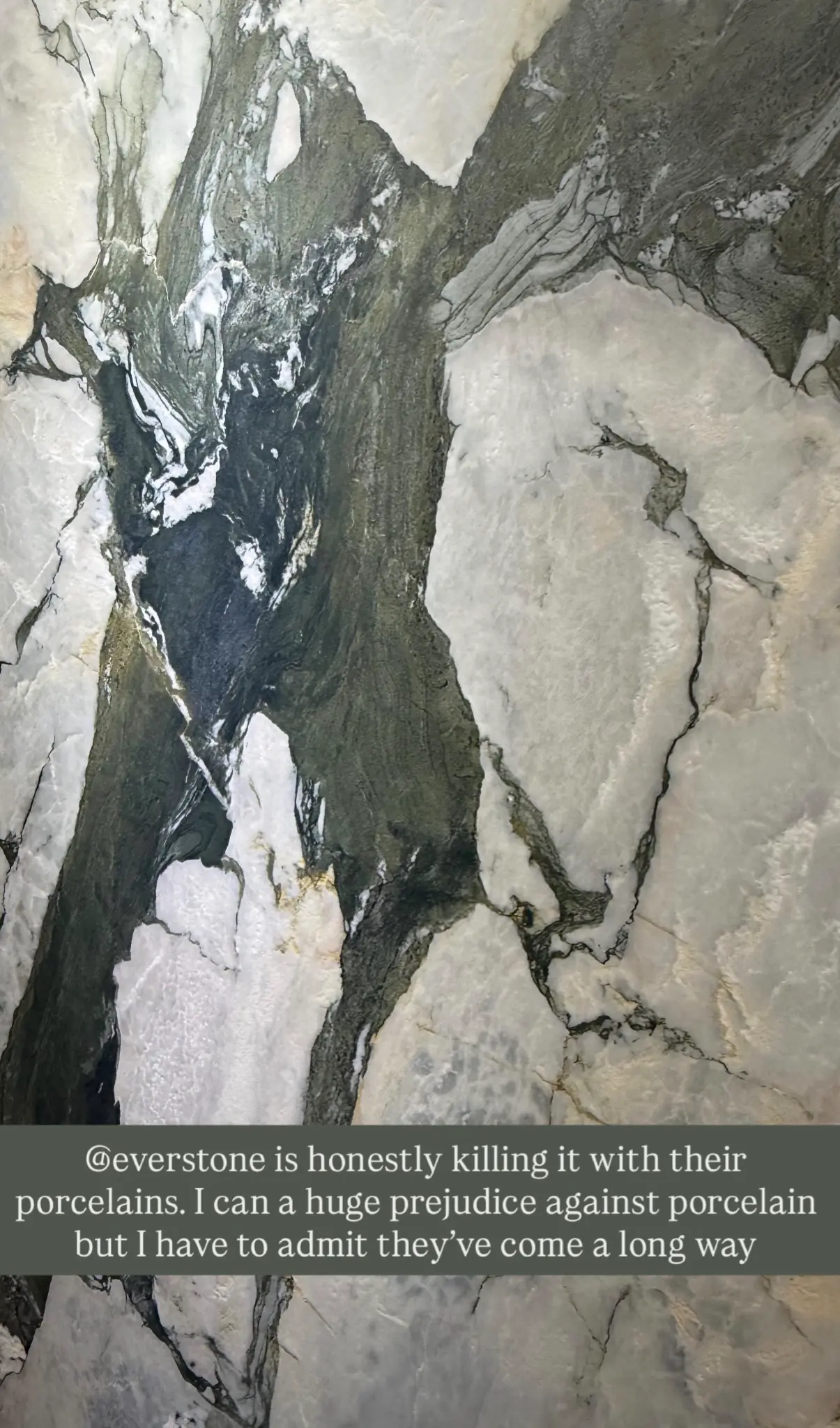
EVERHARD STONE · EVERSTONE. I am still a natural materials advocate — always will be. But the porcelain sheets Everstone presented have reached a point where the visual and tactile difference from natural stone is negligible in the right application. There are scenarios — high-traffic surfaces, wet areas, investment properties — where porcelain is simply the smarter specification. Seeing these in person made that case more convincingly than any catalogue ever could.
NOVER AUSTRALIA. Hands-free pocket door systems. Touch-free, sensor-activated, architecturally considered. Worth the hype — and worth specifying early, before the joinery drawings are locked.
If you are building from scratch. KRAUSE. The most architectural stand at the show. Raw brick pushed into curves that most designers assume only concrete can deliver. Krause reminded the room that traditional materials have not finished surprising us.
KLH PACIFIC. An Austrian company now distributing in Australia — and one of the most quietly impressive conversations I had all week. Their engineered cross-laminated timber system manufactures a four-bedroom house in one hour and completes the build in two days. The material is designed around environmental accountability, not just as a marketing position. The Australian construction industry has a lot to learn from how they think about time, waste, and structure.
ADORA DESIGNS. One of the most genuinely educational sessions on the floor. They walked through the real differences between microcement and Venetian plaster — what performs in wet areas, what is right for external facades, and what only belongs inside. This is the kind of specification knowledge that saves clients from expensive mistakes. I took notes.
The highlight of the show — and a reminder of what technology cannot replace. Most of what I saw across three days was technology that erases itself — smart, silent, invisible. Which is exactly why the next two stops felt like a full breath of air.
YSG STUDIO AT TAPPETI. I have admired Yasmine Saleh Ghoneim's rug designs for a long time. Seeing them in print is one thing. Standing on them is another entirely. The silk is extraordinary — not decorative luxury, but a quality you register through your feet before your eyes process it. The irregular shapes, including pieces built around negative space, read as sculpture as much as floor covering. In person, the palette is alive in a way no photograph captures. In a show dominated by restraint and material silence, interacting with something this tactile and vibrant was the most stimulating moment of the week. For me, the clear highlight.
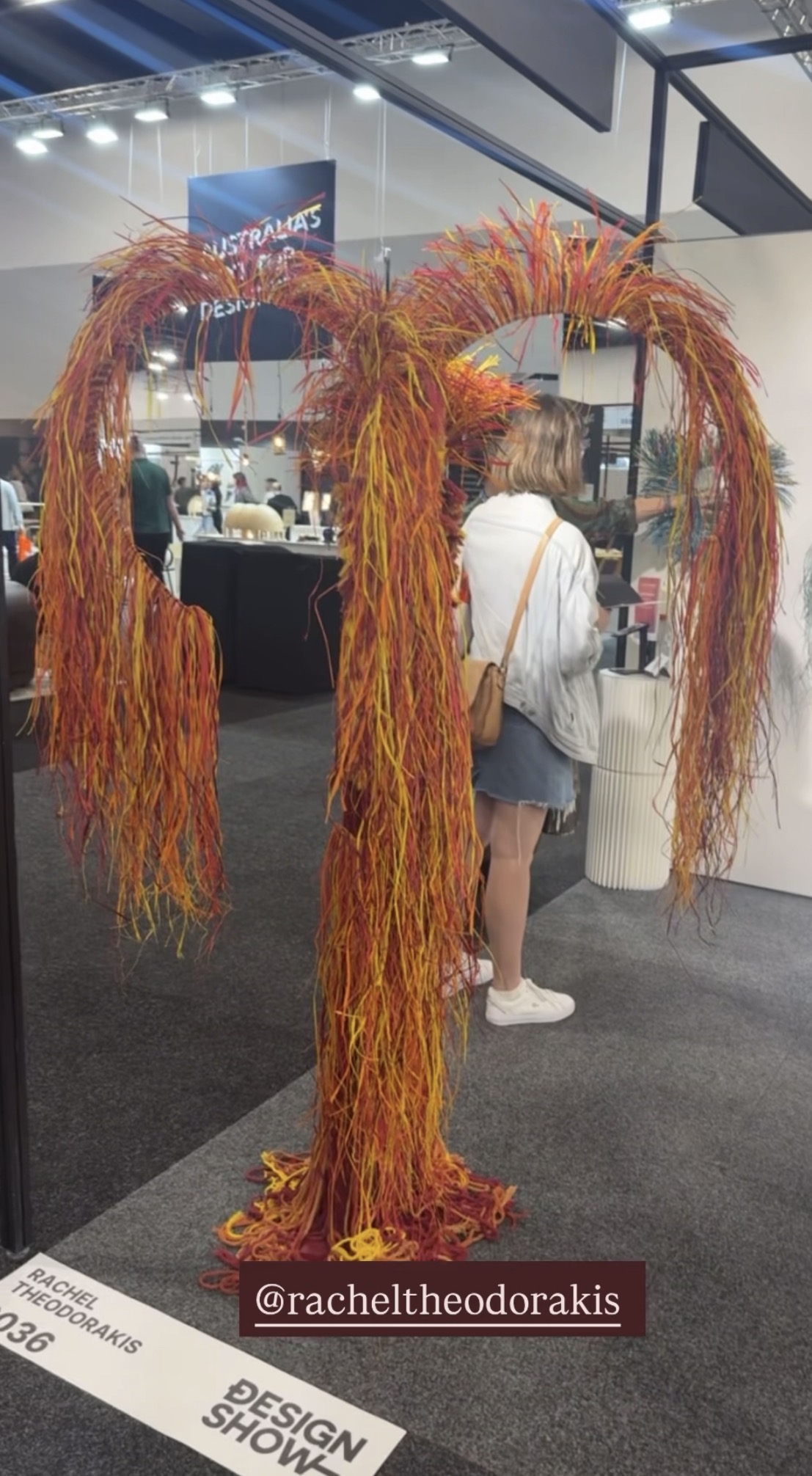
RACHEL THEODORAKIS. Textile sculpture that functions as artwork. Texture, colour, and dimension in pieces that turn a flat wall into a conversation. Every room has a point of arrival — a moment where the eye lands and stays. This work earns that role.
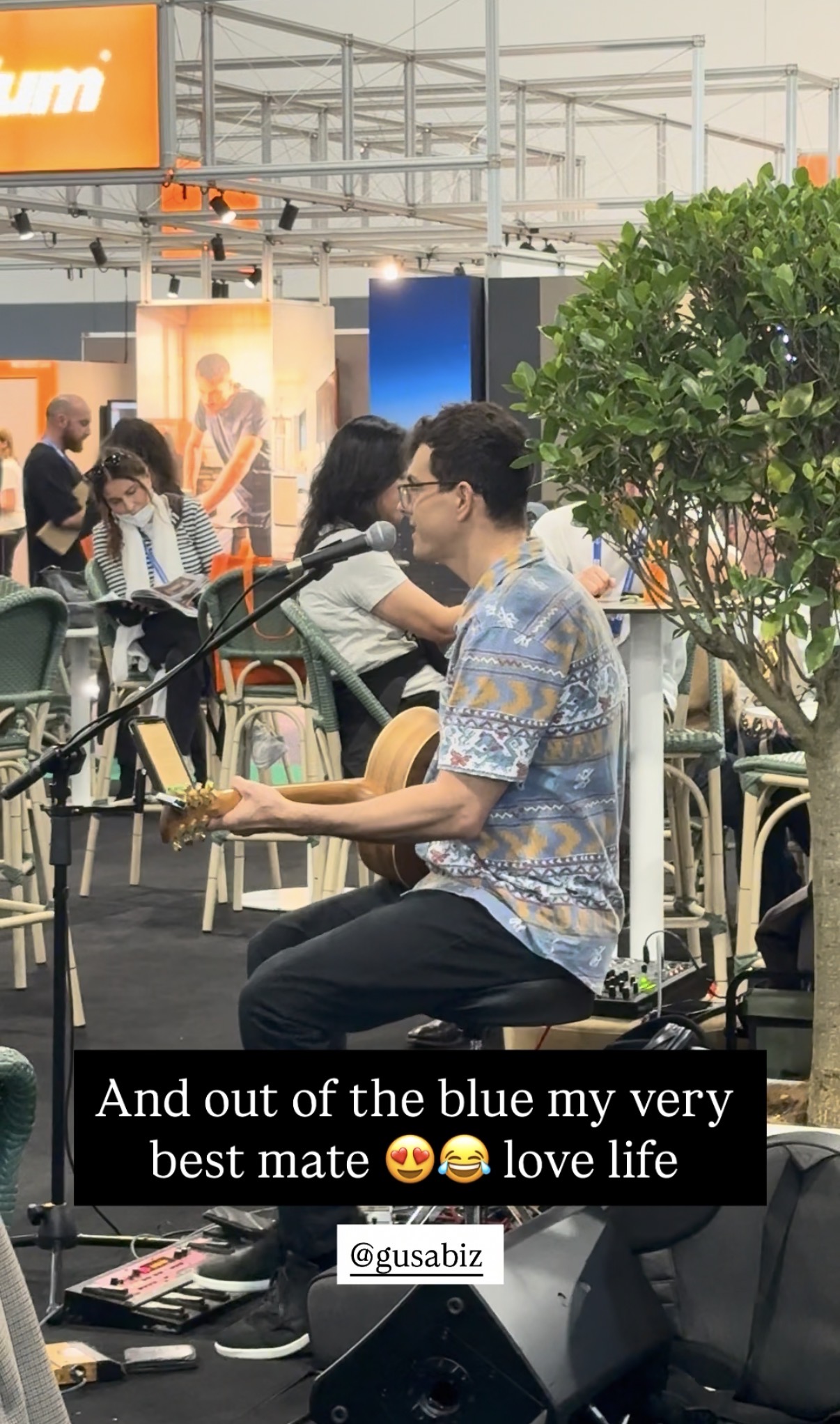
The moment I was not expecting. Somewhere between the Häfele stand and the textile hall, I heard a voice I recognised instantly. My best friend Gus Abis was performing live across the fair floor.
I stopped walking. Everyone around me slowed down. In an environment built for fast decisions and brand impressions, live music did what design at its best also does — it made people pause and feel something.
"Design operates on all the senses. We forget that, and then someone reminds us."
The products that stayed with me are not trying to look like the future. They are solving for how people actually live — with cleaner hands in the kitchen, with walls that earn their place, with a floor you want to stand on. Behind every one of them is a person who cared enough to make it well.
If something here sparked a question about your project — casaalchemystudio.com/casa-consult